
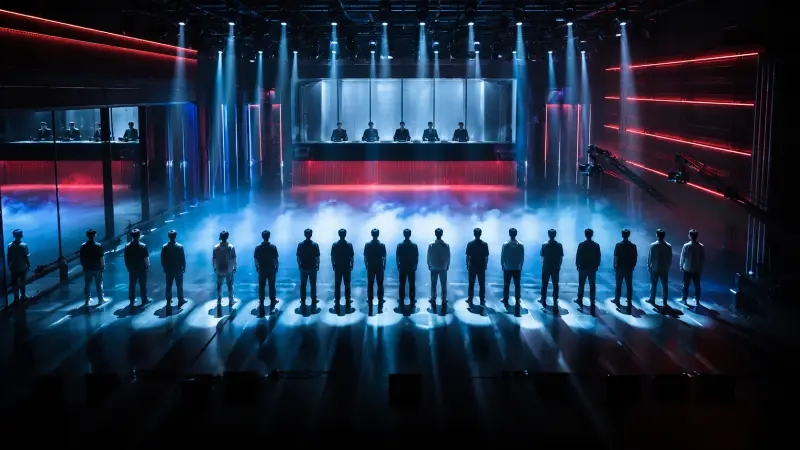
The Scout Stars Reborn arrives on May 8 with a promise that sounds almost impossible in K-pop television: an audition show without the usual elimination machine. ENA's new program is built around 16 male "muses" who have already touched the entertainment system but still need a public second chance. That is the hook. The deeper question is sharper: can a survival-style format really repair the same trainee bottleneck that television helped glamorize?
The Scout Stars Reborn Is Selling A Reboot, Not A Debut
Sixteen candidates enter with history already attached
Most audition shows ask viewers to watch anonymous hopefuls become idols. The Scout Stars Reborn starts from a more complicated place. Reports describe the program as a growth-focused music project for artists who have already debuted or trained, but have not fully shown their potential. The contestants were selected through closed auditions, which immediately changes the emotional temperature. This is not a fantasy about being discovered from nowhere. It is a story about people who already got close, then found out that "close" is not enough.
That framing matters for global K-pop trainees. The hardest part of the trainee system is not only getting into a company. It is surviving the gap between training, debut, attention, and long-term visibility. The Scout turns that gap into content. If the show works, it could give stalled artists a useful bridge. If it fails, it risks packaging their disappointment as another weekly storyline.
Five Masters, One Strange Promise
The mentor lineup is designed to look credible
ENA is not hiding behind unknown judges. The master panel includes Lee Seung Chul, Kim Jae Joong, Red Velvet's Wendy, DAY6's Young K, and Choo Sung Hoon. That lineup mixes old-school audition authority, idol experience, band musicianship, vocal credibility, and physical-performance discipline. It also gives the show an unusually broad language for what "growth" can mean: singing, stamina, stage presence, image reset, and emotional control.
Lee Seung Chul's role is especially important. At the production press conference, he criticized the old battle-and-elimination structure, arguing that one song mission can decide a contestant's fate too narrowly. The Scout's public pitch is the opposite: no classic elimination, no backstory exploitation, no age disclosure as an easy emotional shortcut. In theory, that removes some of audition TV's cheapest weapons.
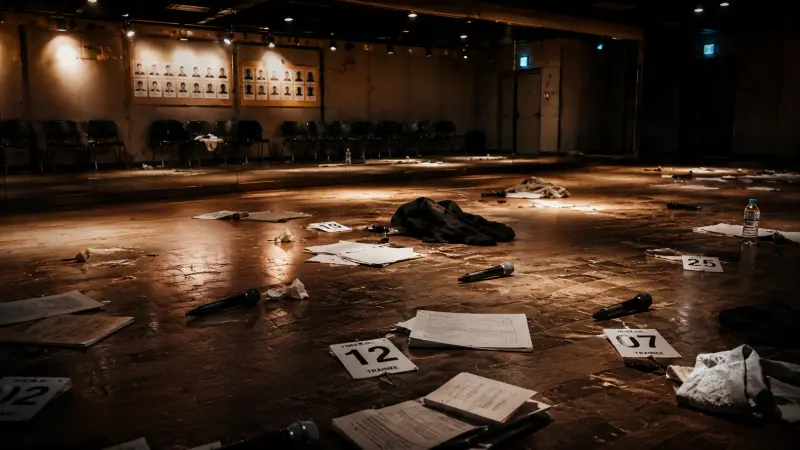 The strongest promise in The Scout is not fame. It is whether a second-chance format can avoid turning stalled careers into disposable content.
No Eliminations Does Not Mean No Pressure
Audience voting still decides who moves forward
The format is less gentle than the slogan sounds. StarNews reported that all 16 contestants will release one new song each, then face a live broadcast evaluation based entirely on national audience votes. Eight contestants are expected to be selected, perform in a concert, and receive album production after the broadcast. That is not the old elimination staircase, but it is still a public sorting system.
The distinction is important. A show can remove the word "elimination" while keeping the economic pressure of ranking. For contestants who have already debuted or trained before, that pressure may feel heavier, not lighter. They are not only proving potential. They are proving that the market was wrong to overlook them the first time.
The male-only structure will also shape the conversation
The Scout's first season is male-focused, and Lee Seung Chul said the early seasons would feature male singers before later seasons move to bands and female singers. That choice may make the competitive frame cleaner for the producers, but it also limits what kind of trainee-system story the first season can tell. K-pop's second-chance problem is not gender-specific. Failed debuts, agency timing, concept mismatch, and visibility collapse hit across the industry.
Why This Matters To Trainees Watching From Outside Korea
The fantasy of "one audition changes everything" is too simple
For international applicants, The Scout should be read less as a dream doorway and more as a warning label. These contestants are not random beginners. Several have recognizable pre-show histories, and the program itself is built on the idea that talent can still stall after debut. That is the part aspiring trainees need to understand before submitting the next online audition tape.
K-pop selection is not a single gate. It is a chain of gates: audition, contract, training, team fit, concept timing, debut budget, fan conversion, and company patience. Missing one gate can send a performer back to the start. The Scout is interesting because it admits that the industry produces unfinished careers, not only finished stars.
Related: What Big 4 Agencies Actually Look for in Trainee Applicants
MEARROW's View: The Reboot Format Is A Mirror
The industry is quietly admitting its waste problem
MEARROW reads The Scout as more than another audition program. It is a sign that K-pop now has enough trained, semi-known, and previously debuted talent to build a full show around second chances. That is both hopeful and uncomfortable. Hopeful, because it means the industry may be finding new ways to recover artists who slipped through. Uncomfortable, because it reveals how much human capital the idol system leaves behind.
The no-elimination branding is smart, but the real test is whether the show gives contestants leverage after the cameras turn off. A concert and album production can matter if they create work, fans, and market proof. They matter less if they become a final episode prize with no follow-through.
The Question After Episode One
A second chance still needs a second market
The first episode will not answer whether The Scout is kinder than survival TV. It will only show whether ENA can make the premise compelling. The harder answer comes later: do viewers convert into listeners, ticket buyers, and long-term supporters for artists who already missed one window?
That is the audition trap The Scout has exposed. K-pop does not lack talented people. It lacks enough durable paths for talented people who were almost chosen, briefly chosen, or chosen by the wrong system at the wrong time. If The Scout can turn those people into working artists, the format deserves attention. If it only gives them a more elegant way to be ranked, the reboot is just another stage light pointed at the same old bottleneck.


Comments
0Loading comments...