
KPop Demon Hunters 52 weeks is the kind of number that makes a normal hit look small. Netflix’s Tudum anniversary page says the animated musical film has spent 52 consecutive weeks in the platform’s Global Top 10, beating the previous 20-week record held by Extraordinary Attorney Woo. That is not a fandom sprint anymore. It is a full-year attention engine.
The cleaner headline is that the film stayed visible for a year. The sharper question is what Netflix has actually built: a movie, a soundtrack, a fandom ritual, or the first K-pop-adjacent screen franchise that behaves like an idol ecosystem.
KPop Demon Hunters 52 Weeks Changes the Record Book
The streak is bigger than a launch-week win
A first-week streaming spike can be manufactured by curiosity, marketing and concentrated fandom energy. A 52-week Top 10 streak is different because it has to survive everything that normally kills a release: new titles, seasonal churn, algorithm fatigue and the next viral obsession. Netflix’s own framing calls KPop Demon Hunters its most-watched title ever and says the property is on track to become its biggest franchise ever.
Deadline put more numbers around the run, reporting that Netflix said the film had reached 600 million views since debut and appeared in the Top 10 in all 93 countries where Netflix publishes Top 10 lists. Forbes also framed the one-year mark as a record-breaking Netflix milestone. The point is not only scale. It is consistency.
K-pop fans understand that distinction immediately. A comeback can dominate one weekend and disappear from the wider public conversation. This film did the opposite. It kept creating reasons to return.
The Franchise Machine Is Already Moving
Screenings, merch and watch parties turn viewers into repeat participants
Netflix did not treat the anniversary like a quiet press note. Tudum outlined theatrical anniversary screenings, outdoor screenings, Netflix House programming, a TikTok Live global watch party and new merchandise tied to partners including Mattel, Hasbro and Jazwares. The same page listed global anniversary activity across markets including South Korea, Japan, Australia, the United Kingdom, Germany, Poland and Israel.
That matters because the franchise is now borrowing a familiar K-pop operating system. Idols do not live only through songs. They live through fan events, collectibles, livestream moments, light-stick culture, comeback rituals and a constant feeling that the story is still unfolding. KPop Demon Hunters is fictional, but the machine around it is becoming very real.
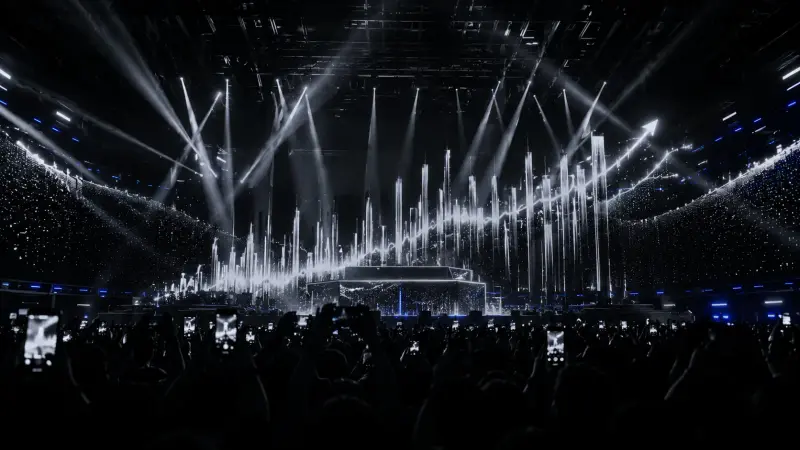
 ChatGPT-generated editorial image showing anonymous fandom silhouettes, global streaming energy and milestone growth without real faces, logos or readable text.
The Soundtrack Made the Fiction Feel Real
Music turned the film into a fandom loop
The reason this worked is not just animation. Deadline reported that the soundtrack spent two weeks at No. 1 on the Billboard 200 and that Netflix said the soundtrack had generated more than 15 billion streams worldwide. Forbes went further, noting the film’s broader chart and awards footprint around Golden and the soundtrack’s crossover performance.
That is the bridge K-pop companies should study. A normal animated hit can sell toys. A K-pop-coded animated hit can sell identity. Once the songs became repeatable outside the film, the story stopped being limited to people who watched once. Fans could replay the music, share edits, argue over characters, buy merch, attend screenings and re-enter the world through different doors.
This is why the one-year streak is not only a Netflix statistic. It is proof that a fictional group can borrow real fandom behavior when the music and mythology are built tightly enough.
The Risk Is Oversaturation — But Also the Opportunity
A year of attention creates pressure for the next chapter
There is a danger hidden inside a record like this. When a property stays hot for an entire year, every new activation has to feel additive, not desperate. Too much merch can make the world feel like a store. Too many events can flatten the magic into calendar management. K-pop knows this problem well: the same fandom infrastructure that creates loyalty can also exhaust people if the emotional center gets buried under products.
But Netflix has one major advantage. The film already has a clean franchise promise: pop stars, supernatural stakes, a global fandom and music that can exist outside the screen. Deadline reported that Netflix confirmed a sequel is in the works, with Maggie Kang and Chris Appelhans returning as directors and Sony Pictures Animation producing. If that sequel lands, the 52-week streak will not look like an isolated miracle. It will look like the pilot episode of a much larger system.
Related: KPop Demon Hunters Wins Two Oscars — Then the Orchestra Cuts Off the Speech
MEARROW’s View: Netflix Just Found the Idol Blueprint
The next battle is not movie vs music — it is ecosystem vs ecosystem
MEARROW reads this record as a warning shot to both entertainment studios and K-pop agencies. Netflix has shown that a screen-first property can behave like an idol brand if it has three ingredients: repeatable music, character attachment and scheduled fandom participation. That combination turns a film from content into a living calendar.
For K-pop agencies, the lesson is uncomfortable. The next global competitor may not be another agency. It may be a platform with distribution, animation, licensing, data and merchandising under one roof. A fictional group does not need dorm logistics, contract renewals or comeback health management. It only needs the audience to believe the world is worth returning to.
That does not replace real idols. It changes the battlefield around them. Real K-pop still has the emotional charge of live performance, human growth and artist history. But KPop Demon Hunters proves fictional idols can now compete for the same fan time, playlist space and merch budget.
The Question After 52 Weeks
Can anyone else keep a fandom world alive this long?
A year in the Top 10 is not just a record. It is a behavioral receipt. People kept watching, listening, buying, posting and returning long after release week ended. That is the kind of durability every K-pop company wants but only a few can build.
Netflix did not simply make a hit about K-pop. It built a K-pop-shaped machine around a hit. The next chapter will show whether that machine can survive the hardest test of all: not becoming louder, but becoming deeper.
Comments
0Loading comments...