

K-pop World Cup soundtrack is no longer a side headline. It has become a test of how far idol fandom can travel when football supplies the stage, the schedule and the national emotion. The most visible names are global — Lisa, Anitta, Rema, BTS references, stadium ceremonies — but the sharper industry question sits closer to Korea: why is TWS suddenly carrying a World Cup-linked cheer song before the group has even finished proving its long-term domestic ceiling?
The Soundtrack Stopped Being Background
From one celebrity slot to a full music lane
World Cup music used to be treated like decoration: one anthem, one ceremony, one clip replayed before kickoff. The 2026 cycle looks different. Recent coverage from The Straits Times framed the soundtrack conversation as more K-pop-heavy than ever, while The Korea Herald connected the current wave back to Jungkook's Dreamers moment at Qatar 2022 and Lisa's bigger 2026 presence. Billboard and BBC coverage of the broader World Cup music rollout also points to a more crowded, more international track list rather than a single-song era.
That matters because K-pop is built for repeatable attention. Football can deliver one giant emotional spike, but idol systems know how to turn that spike into teasers, dance challenges, behind-the-scenes clips, fan edits and streaming goals. The soundtrack is not just audio anymore. It is a distribution layer.
Why TWS Became the Pressure Point
Korea's cheer song is a different job from a comeback
The clearest Korean case is TWS. A Weverse notice announced the digital single Dream With Us on June 5, and Korean and international outlets including Korea JoongAng Daily, The Korea Herald, Soompi, Allkpop and Maeil Business Newspaper reported that the song would arrive on June 11 as a football cheering track for South Korea's national team. That is not a normal rookie-group comeback slot. It attaches TWS to a national sports mood where casual viewers, football fans and K-pop fans overlap at the same time.
That also explains the mixed reaction. Some fans see the assignment as a fast credibility lift for a young Pledis boy group. Others question whether a relatively new team should be placed so close to a World Cup campaign before the public has fully settled on its identity. Both reactions are useful to the company. Praise creates momentum; doubt creates debate; debate keeps the release visible.
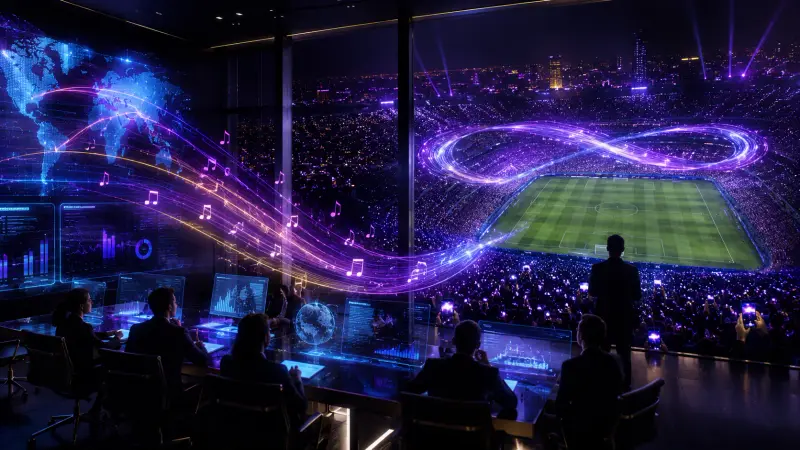 Image: AI-generated via ChatGPT, representing the fusion of K-pop fandom strategy and global football audiences
Lisa Shows the Global Version of the Same Play
Pop regions are being stitched together
The Lisa side of the story shows the larger map. Reports around Goals, the Lisa, Anitta and Rema collaboration connected to the 2026 World Cup music rollout, place K-pop beside Brazilian funk and Afrobeats instead of inside a purely Korean lane. That combination is the real signal. FIFA-era music is being assembled like a global playlist, and K-pop is now one of the default languages of that playlist.
For Korean entertainment companies, this changes the ambition. A World Cup-linked track does not have to convert every football viewer into a stan. It only has to create enough recognition for the next algorithmic step: a short-form clip, a search, a Spotify save, a YouTube recommendation, a fan account thread. In that sense, the football audience is not the final target. It is the top of the funnel.
What This Means for K-pop Companies
Sports is becoming a distribution channel
MEARROW has been tracking the same pattern in live events: K-pop is moving into spaces that were not built for idol fandom first. Related: Gov Ball Just Became K-pop's Weekend — 3 Acts, One NYC Test Nobody Can Ignore. Festivals, brand collaborations and now football soundtracks all work because they place idol systems in front of audiences that did not intentionally enter a fandom space.
The risk is that these placements can look bigger than they actually are. A World Cup headline guarantees attention, not loyalty. If the song is generic, fans will stream it once and move on. If the campaign leans too heavily on national symbolism without giving the group a memorable hook, the artist becomes a logo carrier rather than a beneficiary. The best version gives both sides what they need: football gets emotional lift; the artist gets identity expansion.
MEARROW's Take: The Real Test Is Conversion
Can stadium attention become returning fandom?
The K-pop industry should not read the World Cup soundtrack wave as a trophy by itself. It should read it as a conversion test. Lisa already has the global brand power to turn a football song into another proof of reach. TWS has a harder but potentially more valuable assignment: use Korea's World Cup emotion to make a broader public remember the group, not just the campaign.
If Dream With Us becomes only a seasonal cheer track, the moment will fade when the tournament does. If it gives TWS a recognizable public-facing image — bright, national, youthful and easy to share — then the World Cup link becomes more than borrowed attention. It becomes a shortcut into mainstream memory. That is why this soundtrack story matters: K-pop did not merely enter the stadium. It is now trying to leave with new fans.
Comments
0Loading comments...